Teesside Anti drink driving campaigns, What is the Law on this?
- Dec 2, 2025
- 8 min read

Know Your Rights: The Legal Grey Area Behind Cleveland Police’s Drink-Drive Checkpoints...
2nd December 2025
Teessides most scandal ridden Police Force have recently intensified their anti–drink-drive campaigns, with officers reportedly conducting roadside checkpoints and 'flagging in' motorists for breath tests seemingly without any stated grounds other than the fact "Its December" & "its Coming up to Christmas", so in the eyes of Cleveland Police, you're on the road in your car, its nearly Christmas, so you're Guilty until proven innocent...
While these operations are being promoted as safety measures, a number of legal experts claim they raise some important questions about police powers, motorists’ legal rights, and whether existing legislation adequately governs blanket roadside testing.
This report sets out the current law, highlights some key case law, & examines the legal 'grey area' surrounding mass breath-testing operations, and provides practical guidance for motorists should you be stopped by what's considered by many to be one of Teessides most 'corrupt' & dangerous institutions.
1. The legal framework: stop vs breath test

1.1 Power to stop – s.163 Road Traffic Act 1988
Under section 163 RTA 1988, police can stop any vehicle driven on a road. The driver must stop when required to do so by a uniformed constable; failing to stop is an offence.
The courts have accepted that this power can be used randomly as part of general crime or road safety operations.
So: Cleveland Police can lawfully set up checkpoints and wave in vehicles without suspicion.
1.2 Power to require a breath test – s.6, 6A–6C RTA 1988
The crucial distinction is between stopping you and testing you.
The power to make you provide a roadside breath sample is detailed in s.6 and 6A RTA 1988 (preliminary breath tests). A constable may only require a test if one of the statutory conditions applies, for example:
The Police reasonably suspect you have drink alcohol or a drug in your body, or are under the influence
They reasonably suspect you have committed a moving traffic offence
You have been involved in a road traffic accident
Government guidance for the public says the same in plain English: you can be breathalysed if the police think you’ve been drinking, you’ve committed a traffic offence, or you’ve been involved in an accident.
There's no wording in the Act that says: “a constable may require a breath test from any driver they stop.”
2. What the case law and practitioner texts actually say
A leading practitioners handbook on drink and drug driving summarises the case law as follows:
There's no power randomly to administer preliminary tests in Great Britain.
Police do have wide discretion to stop vehicles under s.163 and at common law.
Once stopped, they may require a breath test only when the statutory reasonable-suspicion conditions in s.6 are satisfied.
The handbook discusses two Divisional Court decisions:
Steel v Goacher [1983] RTR 98
Officers carried out a “random crime check” and stopped the driver. After stopping him, they smelled alcohol and then required a breath test. The Divisional Court held that they had power at common law to stop the vehicle and, having then detected alcohol, they were entitled to require a test in line with the statute.
Chief Constable of Gwent v Dash [1986] RTR 41
Police were randomly stopping cars specifically to find drink drivers. When they stopped Dash’s car, they smelled alcohol and went on to breathalyse him. The court held that the requirement of “reasonable cause to suspect” applies to the breath test, not to the decision to stop. Provided there is genuine suspicion at the time of requiring the test, the stop itself can be random.
These cases are however often mis-quoted online as “banning random drink drive operations”. In reality, they do something slightly different:
They approve random stops,
They also underline that a breath test still needs lawful suspicion in each individual case.
3. No legal power for truly random breath tests...
Where does that leave “everyone blows” Christmas-style checkpoints?
3.1 Police and official guidance
Multiple official and professional sources say the same thing:
West Yorkshire Police /
“The police cannot stop a vehicle just to carry out a random breath test. They have to have a reasonable suspicion that the person has consumed alcohol or drugs.” West Yorkshire Police Website+1
Norfolk Police drink- and drug-driving policy (2024):
“There is no power in law to carry out random breath or saliva tests. However, there is a power under Section 163 of the Road Traffic Act 1988 … to stop vehicles.” Norfolk Police+1
CPS prosecution guidance on drink/drug driving treats preliminary tests as only available where the officer reasonably suspects alcohol/drugs, a traffic offence, or an accident. Crown Prosecution Service
Some specialist motoring solicitors echo this view:
police can stop you at random, but they cannot lawfully insist on a breath test unless the statutory conditions are met. JMW Solicitors+6Ashworth Motoring Law+6araglaw.co.uk+6
3.2 Parliament has deliberately not yet introduced random testing
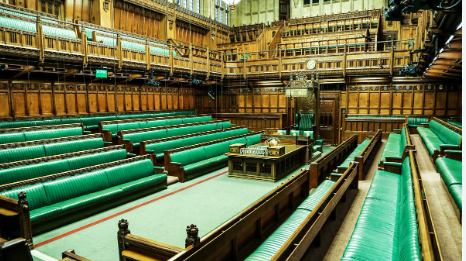
When MPs debated “Random Breath Testing at Roadside Checkpoints” in 1991, ministers acknowledged:
Police can stop vehicles at random under what is now s.163.
Under s.6, a breath test may be carried out only if there is reasonable cause for suspicion that alcohol has been consumed.
Later policy work on road traffic law makes the same point, and discusses random testing as a possible future reform, not something that already exists. In other words: Parliament knows random breath testing would require a significant change in the law – and has not made that change.
4. So are Cleveland Police abusing the powers they've been given?

Yes & No...If Cleveland Police are stopping vehicles under s.163, then breath-testing only where there is some basis for suspicion (smell of alcohol, admission of drinking, behaviour, time/place, etc.), they will argue they are operating within the current law and the Dash/Steel line of authority.
But if, in practice, officers are seemingly flagging in everyone at a checkpoint and automatically requiring all drivers to blow before forming any case-specific suspicion, then the operation ventures very close to the “random testing” that both Parliament and police policies say there is no legal power to conduct.
That's the real legal grey area: the more Cleveland Police treat a checkpoint as a conveyor belt, where every motorist must blow, the weaker the statutory basis becomes – and the greater the civil-liberties argument that they are enforcing powers they simply do not have.
5. What to do if you’re stopped at a Cleveland Police drink-drive checkpoint
Nothing below is individual legal advice, but it sets out the general position under current law.
5.1 You must stop
If a uniformed officer requires you to stop, you must comply.
Failing to stop for police is a separate offence under s.163 RTA 1988.
5.2 Stay calm, polite and non-confrontational
Whilst Cleveland Police is largely considered "An Extremist group", its important to remain non-confrontational with those operating under instruction from the group.
Do not argue with them at the roadside.
Hostile behaviour will almost always be used to justify further action.
5.3 Ask the key question – politely
Before (or as) the officer demands a breath test, you can calmly ask:
“Can you tell me what legal grounds under section 6 you’re relying on to require a breath test?”
The officer must respond with something along the lines of:
“I have reasonable suspicion you’ve been drinking” (for example, smell of alcohol, slurred speech, time/place).
“You’ve committed a moving traffic offence.”
“You’ve been involved in, or are connected with, a road traffic accident.”
If they admit it is “just random” or “we’re testing everyone we flag in today”, that goes directly to the legality of the requirement.
5.4 Should you refuse the test?

Perhaps the most important part of this report.....Legally: Failing to cooperate with a preliminary test when lawfully required is a criminal offence under s.6(6) RTA 1988. The difficulty is always going to be whether the requirement was in fact “lawful” & will usually be argued after the fact, & usually in court.
In practice: Outright refusal at the roadside almost always provokes already 'irate' Cleveland Police Officers & will always lead to arrest and a “fail to provide” allegation.
The safer course of action for most people, is to simply avoid making things worse. Its often better to comply with the test, but carefully record what happened and then seek legal advice promptly.
5.5 Record everything you reasonably can
As soon as possible afterwards, note:
date, time and exact location
what the officer said about why you were stopped
specifically what they said when requiring the breath test
their collar number and (if you can see it) body-worn video reference
whether they asked about drinking before or after they decided to test you
If you believe the requirement was unlawful (e.g. they explicitly said it was a random test), this record will be vital if you later:
challenge the lawfulness of the stop/test in court,
or
submit a complaint with Professional Standards / the IOPC.
6. Why this needs to be tidied up – legislatively, not by quiet practice
At the moment, Parliament has refused to grant police a power of blanket random breath testing, with Police policies openly admitting that there is no power in law for random breath or saliva tests. However, established cases from those being stopped on Teesside shows Cleveland Police, appear to be drifting towards an “everyone blows” operation in all but name, opening up to what could be some serious litigation being undertaken in order to clarify the law.
If random testing is thought necessary for road safety, it should be:
openly debated,
clearly legislated for (with safeguards), and
subject to proper democratic scrutiny.
What shouldn't happen is “random 'everybody blows' testing being introduced by the back door” being achieved by stretching the “reasonable suspicion” legislation beyond recognition & then using mass checkpoints as a cover !.
--------------------------------------------------------------------------------------------------
Sources used in this report
Legislation
Road Traffic Act 1988, sections 6, 6A–6C (preliminary breath testing powers) and section 163 (police power to stop vehicles).
Police and Criminal Evidence Act 1984 (PACE) – powers relating to seizure of property, evidential material, and police conduct.
Case Law & Practitioner Commentary
Steel v Goacher [1983] RTR 98 – confirmed broad police powers to stop vehicles and clarified when suspicion arises to justify a breath test.
Chief Constable of Gwent v Dash [1986] RTR 41 – held that random stops are lawful, but breath tests still require statutory “reasonable suspicion”.
Drink and Drug Driving Law Handbook (4th edition) – widely cited practitioner text summarising the above case law and confirming no power for random breath tests.
Parliamentary & Government Sources
Hansard – House of Commons & House of Lords debates on Random Breath Testing (1991 onward)– Ministers confirm police have no random breath-testing power without statutory reform.
Department for Transport documents & road safety reviews– Confirm random testing has been proposed in the past but never enacted.
Police Policies & Official Guidance
Norfolk Police – Drink & Drug Driving Policy (2024)– Explicitly states “No power in law to carry out random breath or saliva tests.”
AskThePolice.co.uk (National Police Chiefs’ Council resource)– Clarifies when officers can and cannot require a breath test.
College of Policing / NPCC – Guidance on Photography & Filming– Confirms there is no prohibition on filming police in public and officers should not delete recordings.
Legal & Professional Commentary
(Used to cross-verify operational interpretations of the law)
Ashworth Motoring Law – Are Random Breath Tests Legal?
Reeds Solicitors – Driving Over the Limit: What to Do When Stopped by Police
Various specialist motoring-law firms explaining the reasonable-suspicion requirement for preliminary testing.
Public-Rights & Filming Guidance
Metropolitan Police – Public & Media Filming Guidance– Confirms public right to record police and lack of any general prohibition.
Home Office / Parliamentary Written Answers (2023)– Confirms no statutory restrictions on filming police in public places.