Did Hartlepool Borough Council Cover Up Sexual Abuse in Its Care Homes During the 1980s and 1990s?

Revelation comes in the wake of the Casey Report, which shows some local councils implicated in the Child Sexual Grooming Scandals did try to 'cover up' the incidents, with calls for a local inquiry into allegations of grooming to be made.
17th June 2025

Recent revelations about historic child sexual abuse in the UK, particularly in light of the grooming gang scandals in towns like Rotherham, Rochdale, and Oldham, have cast a renewed spotlight on local councils’ handling of safeguarding failures.
A Local Government Ombudsman report has recently brought Hartlepool Borough Council under spotlight over its handling of historical child sexual abuses, dismissing a complaint from a woman, referred only as Mrs X, about the abuse she allegedly suffered in council-run children’s homes between the 1980s and 1990s.
The council’s refusal to investigate, citing “missing” or “too limited” records, raises disturbing questions about transparency, accountability, and whether systemic failures here were also deliberately concealed. For our readers, who are no strangers to questioning institutional narratives, its important to find the facts noting that Labour controlled Hartlepool Borough Council from 1979 to 1996, according to Wikipedia, just like many of the local councils implicated int he Casey Report leading many to speculate whether this points to yet another cover-up or just simple bureaucratic negligence.
The Complaint and the Ombudsman’s Findings

Mrs X, a Hartlepool resident, lodged a complaint in May 2024, alleging that Hartlepool Borough Council failed to protect her from severe abuse starting shortly after her birth in the mid-1980s. She claims the council’s decisions allowed “dangerous adults” to mistreat her in its children’s homes. The council refused to investigate the allegations, claiming its complaints policy, which typically dismisses grievances older than 12 months unless there’s a compelling reason to extend the time limit. The council stated that, whilst some of Mrs X’s records from the early 1990s were in fact located, they were allegedly “too limited to inform a robust and meaningful investigation” of events which were said to have occured over 30 years ago. The Ombudsman upheld this decision, finding the council’s refusal not “obviously unreasonable” and noting that missing records made a fair investigation unlikely.
The Ombudsman pointed out that the council may have referenced the wrong complaints procedure (citing the statutory Children Act 1989 process instead of its own policy), but this didn’t alter the outcome. Both procedures allow discretion to investigate late complaints, yet the council declined, citing insufficient records. According to the council’s document retention policy, child protection case files should be kept for 40 years from a child’s birth, meaning records for someone born in the mid-1980s should still exist. The claim that these records are 'missing', 'incomplete' or 'inadequate' raises serious concerns about how they were managed—or if they were in fact intentionally lost.
Labour’s Control of Hartlepool Borough Council
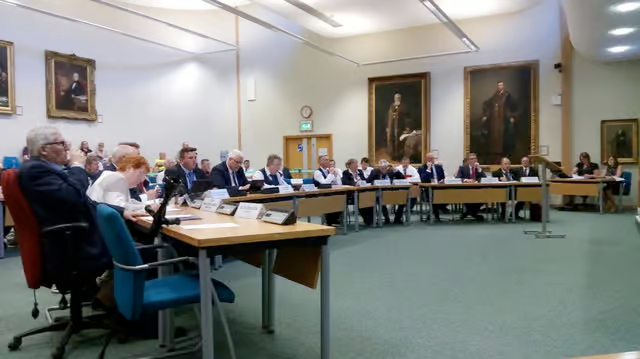
This in itself raises a serious red flag, because just like in the Casey Report, From 1979 to 1996, Hartlepool Borough Council was under Labour control, as noted on Wikipedia. This period overlaps with the alleged abuse described by Mrs X, which began in the mid-1980s and continued into the 1990s. Labour’s dominance during this time places the party’s local leadership under scrutiny for its oversight of children’s services. In other towns, such as Rotherham, Labour-run councils faced criticism for failing to act on reports of abuse, partly due to fears of being labeled racist, as many perpetrators in those cases were of Pakistani heritage. Whilst there’s no direct evidence in the Ombudsman’s report linking Labour’s control to a cover-up in Hartlepool, the political context raises questions about whether similar dynamics—prioritising reputation or community relations over child safety—could have influenced decision-making at the time.
It gets worse when its claimed Whitehall Officials may have tried to 'cover up' historical sexual abuse allegations in at least one local council, with Dominic Cummings, who in 2011 was said to have been working for the then MP Michael Gove claims Whitehall officials tried to convince Michael Gove to go to court to cover up the Rotherham grooming scandal in 2011. According to a Sky News Report, Rotherham Council reportedly approached the Department for Education asking for help following inquiries by The Times. The paper's then chief reporter, the late Andrew Norfolk, was asking about sexual abuse and trafficking of children in Rotherham.
Rotherham Council, reportedly went to Lord Gove's Department for Education for help. Officials were said to have 'considered the request' and then recommended to Lord Gove's office that the minister back a judicial review which, if successful, would have stopped The Times from publishing the story.
Echoes of Wider Scandals

The Hartlepool case doesn’t exist in a vacuum. It emerges amid the UK’s grooming gang scandals, where systemic failures allowed widespread abuse. In Rotherham, its claimed an estimated 1,400 children were sexually exploited between 1997 and 2013, with Labour-run councils and even the police ignoring early warnings, including reports from the 1990s about children being targeted by taxi drivers. Rochdale saw 47 girls identified as victims, and Oldham’s 2022 report highlighted council and police inaction. While Mrs X’s allegations in Hartlepool seemingly focuses on allegations of abuse in care homes rather than grooming gangs, the claim of missing records and the council’s quick dismissal mirrors patterns seen elsewhere. In Rotherham, for example, institutional denial and lost evidence hindered justice for years. Could Hartlepool’s missing records reflect a similar effort to bury uncomfortable truths, or is it simply a case of poor archiving?
Was There a Cover-Up?
A cover-up implies deliberate intent to conceal wrongdoing. Whilst the Ombudsman’s report doesn’t provide direct evidence of this occuring, several factors fuel suspicion:
Missing Records: Hartlepool Borough Council’s claim that records from the 1980s and 1990s are “too limited” is deeply troubling, especially since its retention policy should ensure their preservation for someone born in the mid-1980s. Poor record-keeping was common in the pre-digital era, but the pattern of “lost” records in abuse cases across the UK—like in Rotherham—suggests more than just mere oversight.
Swift Dismissal: The council’s refusal to investigate, despite its discretionary power, feels dismissive given the severity of Mrs X’s claims. The Ombudsman’s acceptance of this decision without further probing the missing records raises questions about whether the system prioritises institutional protection over victims.
Political Context: Labour’s control of Hartlepool Borough Council from 1979 to 1996 places its leadership at the time under significant scrutiny. In other Labour-run councils, like Rotherham, political sensitivities around race and community relations contributed to inaction on abuse. Without transparency, it’s reasonable to question if similar dynamics played a role in Hartlepool.
Survivor Testimony: Mrs X’s complaint echoes the experiences of survivors like Sammy Woodhouse in Rotherham, who described authorities ignoring abuse and protecting perpetrators. The council’s refusal to engage with Mrs X mirrors the institutional indifference seen in other scandals.
However, some will likley argue the council’s position has some merit. Investigating 30-year-old allegations without sufficient records is difficult, and the Ombudsman’s role is to assess procedural fault, not to mandate reopened cases. Missing records could result from outdated archiving practices rather than deliberate destruction, and the council followed its complaints policy in declining to investigate.
The case underscores the wounds of historic abuse scandals remains raw. The dismissal of the Hartlepool womans complaint leaves her without justice and the public without clarity. Labour’s control of the council during the alleged abuse period adds a layer of not only complexity, but political accountability, particularly given the parallels with other Labour-run councils implicated in grooming scandals. If records are truly missing, the council must explain why. If they exist but were deemed “too limited,” transparency about their contents is essential. Without an investigation, distrust will persist, especially when other councils, like Oldham, have faced criticism for resisting public inquiries.
There will be many however who will believe this case really needs to be looked at again, where Hartlepool Borough Council should:
Explain the Missing Records: Provide a detailed account of why Mrs X’s records are “too limited” and what efforts were made to locate them.
Reconsider Discretion: Use its discretionary powers to investigate credible claims of historic abuse, even with incomplete records, as survivor testimony can be critical.
Support Survivors: Offer resources and support for Mrs X and others, following the model of Rotherham’s Operation Stovewood.
Learn from History: Emulate Telford’s victim-centered inquiry to uncover systemic failures and work with survivors to deliver justice.
Until these steps are taken, questions about Hartlepool Borough Council’s actions under Labour’s leadership in the 1980s and 1990s will always linger. For Mrs X and other potential survivors, justice delayed is always going to be 'justice denied'. As seen in Rotherham, Rochdale, and beyond, silence only perpetuates harm. Hartlepool therefore must confront its past with transparency and courage.


