Incorrectly Drawn boundary line causes local council to step in on a planning decision.
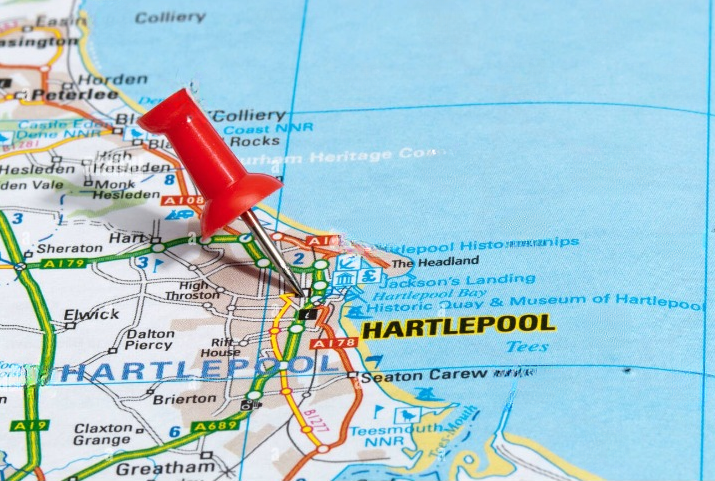
Admin Blunder causes Hartlepool Borough Council chiefs to step in on a planning application after its claimed an 'incorrectly drawn boundary line' could have derailed a significant planning development.
13th November 2024
In a recent development, its claimed an administrative error involving Hartlepool Borough Council (HBC) and the Hartlepool Development Corporation (HDC) has raised eyebrows in local planning circles, following whats claimed to have been 'a misdrawn boundary line' which has led to an overlap between the jurisdictions of these two planning authorities.
This error, identified when a planning application for the disputed border was submitted could have significant implications for ongoing and future planning applications, particularly in the context of whats claimed to be a new development proposal off Maritime Avenue.
The error reportedly come to light when a planning application was submitted for a site predominantly located within the Hartlepool Development Corporations (HDC's) designated area. Its claimed in the report that the intention was always for the entire site to fall under the HDC's jurisdiction, as reflected in previous planning applications. However, due to an incorrect boundary mapping, its claimed a small portion of the site technically fell under the Hartlepool Borough Councils planning authority. This created an administrative conundrum, where the application could be subject to review by two separate planning organisations, resulting in potential delays, inconsistencies, and significant confusion.
The overlap, although minor in terms of land area, is said to have introduced a significant complication: the need for a cross-boundary planning application.
In practice, this means both HBC and HDC would have to process the application jointly. However, given the urgency to secure external funding before the March 2025 deadline, the council deemed this route to be 'impractical'.
There was a risk of the loss of considerable external funding council report claims...
To resolve this, its claimed HBC opted to delegate its planning function for this specific application entirely to the Development Corporation. This move was said to have been made under delegation of the council's constitution, which allows for swift decision-making in urgent cases. The Managing Director, in consultation with the Leader of the Council and key officers, exercised delegated power, citing the risk of losing significant external investment if the application process were delayed.
According to the council's report:
"Failure to take the decision quickly would, or would be likely to, harm the interests of the Council and the public. The decision is so urgent that it cannot wait until the next meeting of the Committee at which the decision would normally be taken."
This decision has been recorded as part of the Officer Decision Record and is accessible through the Democratic Services team for public inspection.
Six other sites could be effected by the boundary blunder
Its claimed the administrative error affects not just the site off Maritime Avenue, but potentially six other sites where boundary discrepancies have been identified. Although only three sites have shown these issues so far, the council has taken a precautionary approach by including all seven sites within the scope of its urgent delegation.
A planning expert told HBC Exposed that the overlap in jurisdiction, "might seem trivial at first glance", but its implications are far-reaching:
Delays in Planning Approval: A cross-boundary application requires coordination between HBC and HDC, which could extend the approval process beyond critical funding deadlines.
Increased Costs and Bureaucracy: Handling applications across two authorities could introduce additional costs and bureaucratic hurdles, which developers might find off-putting, potentially affecting local investment.
Legal and Financial Risks: Any delay or mismanagement could lead to missed funding opportunities and legal challenges from developers or other stakeholders.
HBC briefly considered processing the application as a cross-boundary issue but dismissed this option due to the minor size of the overlap and its minimal impact on the overall development. The decision to delegate the planning authority entirely to the HDC was seen as the most pragmatic solution to prevent any delays.
"Given the small errors in the boundary drawing, a cross-boundary application would not be suitable as the element of HBC area is too small to have an impact on the wider development," noted the council report.
A clash of Authority, Is this a symptom of larger issues set to come in the near future ?
This incident raises concerns about the accuracy of boundary mappings and administrative oversight at HBC. How such an error managed to slip through the cracks highlights potential weaknesses in the council's planning and mapping processes according to critics. With the introduction of the HDC as a new planning authority, such errors could become more common, leading to jurisdictional conflicts and delayed projects.
The question now is whether this will be an isolated incident or if further discrepancies will emerge as more applications are submitted. The council's swift response in delegating authority may have averted immediate funding risks, but many claim it fails to address the root cause of the problem, & that more problems are likely to rise in the future.....


