Opinion: We can now all agree, the UK's Courts are riddled in 'corruption' & political bias...
Updated: Aug 19, 2025

The UK once again seen 'Two Tier Justice' enacted once more, as a former Labour Councillor walks away scot free, whilst a similar incident lands Lucy Connolly with a Two Year & Seven Months prison term.
15th August 2025
Suspended Labour councillor Ricky Jones has been found not guilty of encouraging violent disorder during an 'anti-racism' demonstration in Walthamstow, east London, on August 7, 2024.
The decision, handed down today at Snaresbrook Crown Court, has reignited debates about judicial inconsistencies in the UK’s clearly 'corrupt' judicial system, particularly when contrasted with the recent sentencing of Lucy Connolly and, locally, the 2021 jailing of former Hartlepool councillor Tony Richardson.
These cases have fuelled accusations of two-tier justice and growing authoritarianism in the UK, with many questioning whether political affiliations or social status influences legal outcomes.
Ricky Jones: A Controversial Speech and a Not Guilty Verdict

Ricky Jones, a 57-year-old former Dartford councillor, was charged with encouraging violent disorder after a video surfaced of him addressing a crowd at an 'anti-fascist' protest in Walthamstow.
In the footage, Jones described far-right protesters as “disgusting Nazi fascists” and appeared to call for their throats to be “cut.” The remarks, made in the wake of nationwide violent disorder following the tragic stabbings of three children at a dance class in Southport, were widely shared online, prompting swift action from the Labour Party, which suspended Jones the day after the incident.
Jones pleaded not guilty, with his defence barrister, Hossein Zahir KC, arguing that while Jones acknowledged making the remarks, he did not intend for them to incite violent disorder.
On August 15, 2025, a jury at Snaresbrook Crown Court acquitted Jones, allowing him to walk free. The verdict has sparked significant backlash, with critics arguing that the decision reflects a leniency not extended to others convicted of similar or lesser offences.
Lucy Connolly: A Harsh Sentence for a Deleted Tweet
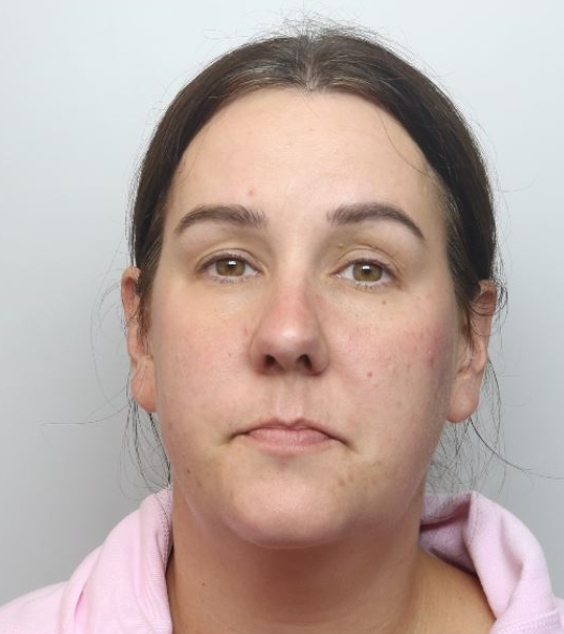
The not guilty verdict for Jones stands in stark contrast to the case of Lucy Connolly, who was sentenced to 31 months in prison for a deleted tweet deemed to incite racial hatred. Connolly’s post, which was removed shortly after being shared, was written in response to the same Southport stabbings that sparked the nationwide unrest.
Despite the tweet’s deletion and Connolly’s lack of prior criminal history, the court handed down a significant custodial sentence, prompting widespread criticism from those who see it as evidence of disproportionate punishment for online speech.
The disparity between Jones’s acquittal and Connolly’s imprisonment has fuelled public outrage, with posts on X describing the situation as a clear example of “two-tier justice.”
One user stated, “The not guilty verdict for Labour Councillor Ricky Jones and 2.5 year sentence for Lucy Connolly has just shown the entire country we have a two-tier justice system. Some people might have doubted it. Not any more.”
The sentiment reflects a growing concern that the UK legal system applies different standards depending on the individual’s political alignment or public profile.
A Local Echo: Hartlepool’s Tony Richardson

For residents of Hartlepool, the controversy surrounding Jones and Connolly evokes memories of a local case from just over four years ago. In 2021, former Hartlepool councillor Tony Richardson was jailed for six weeks after sending what the court described as a “grossly offensive image” online.
The image, shared in a private online group, was deemed to breach communications laws, leading to Richardson’s swift conviction and imprisonment. At the time, the case raised concerns about the boundaries of free speech and the speed with which authorities pursued online offences, particularly when compared to other crimes that often receive lighter penalties.
Tony Richardson case, much like Connolly’s, highlighted the judiciary’s increasing focus on policing online content, a trend that critics argue disproportionately targets individuals with less political clout or institutional backing.
For Hartlepool locals, the juxtaposition of Richardson’s six-week sentence for an image and Jones’s acquittal for inflammatory public remarks made on a microphone at a protest feels like a continuation of a very unsettling pattern. The fact that Jones, a Labour councillor, walked free whilst others face jail time for digital posts has only deepened suspicions of bias in the legal system.
The cases of Jones, Connolly, and Richardson have become flashpoints in a broader debate about justice and freedom in the UK. Critics argue that the UK judicial system appears to favour those with establishment connections, pointing to Jones’s acquittal as evidence of leniency for Labour-affiliated figures. Posts on social media have echoed this sentiment, with one user questioning how someone who “physically stabs” another can walk free, whilst Connolly receives a 31-month sentence for a tweet.
This perception of two-tier justice is compounded by concerns about increasing authoritarianism in the UK. The rapid prosecution of online speech cases, such as those of Connolly and Richardson, contrasts sharply with the delayed trial of Jones, which was initially postponed for seven months before his eventual acquittal. Critics argue that this discrepancy reflects a selective application of “swift justice,” a term championed by Prime Minister Keir Starmer in response to last summer’s riots. The fact that Jones’s trial was delayed while others faced immediate consequences has led some questioning whether the government prioritises certain narratives over others.

Moreover, the focus on policing online content and public speech has raised significant alarms about the erosion of free expression. The jailing of individuals like Connolly and Richardson for digital posts, & even our very own editor of the Teesside & Durham Post being placed under the spotlight by police over reports which have been published contrasted with Jones’s acquittal for a public call to violence, has led to accusations that the UK is sliding toward authoritarianism, where the state selectively punishes speech to control public discourse. The targeting of online content, particularly when it challenges establishment views, has sparked fears that the government is using legal mechanisms to suppress dissent while protecting its allies.
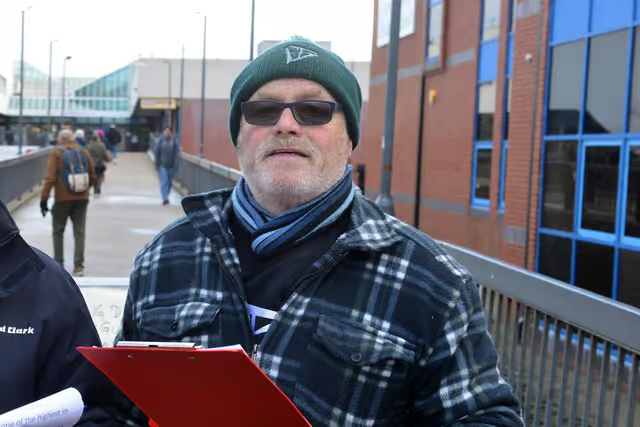
In Hartlepool, the memory of Tony Richardson’s imprisonment lingers, and the recent developments in the Jones and Connolly cases have reignited local frustrations.
Residents who followed Richardson’s case see the worrying parallels in the corruption which lingers within the judicial system. The fact that a councillor like Jones, whose remarks were broadcast widely and condemned by his own party, could avoid punishment whilst others face harsh sentences for lesser offences has left many feeling increasingly angry & hostile towards the justice system itself.
The acquittal of Ricky Jones, juxtaposed with the prison sentences of Lucy Connolly and Tony Richardson, has once again brought the issue of two-tier justice to the forefront of public debate coming just over a year since the summer 2024 riots rocked the country.
As the UK now grapples with rising tensions over free speech, political bias, and judicial corruption, these cases serve as a stark reminder of the challenges facing the legal system. For many, the question now is not just whether justice is being served, but whether it is being applied consistently and transparently.

As Hartlepool residents reflect on their own history, the national spotlight on Jones and Connolly has amplified calls for the justice system to be 'bottomed out' of its extremist judges to restore fairness within the system.
Whether the government and judiciary can address these concerns remains to be seen, but for now, the perception of a two-tier system—and fears of growing authoritarianism—continue to cast a long shadow over the UK’s legal landscape & claims the Ricky Jones case is just one spark away from re-ignighting the very same tensions which seen areas of the country ablaze with riots never before seen in years, and a governmnt thats simply bever learned from it...


