You Cannot Play the Victim While Ignoring the Dead: Cleveland Police’s Victim Claim Ignores Those Who Were Assaulted in Custody & Never Came Home...

The Graves of the Victims of Cleveland Police's Brutality Tell a Different Story: Cleveland Police Cannot Claim Victimhood While Its Own Record Is a One Shrouded in Cover-Up's..
16th Feb 2026
Teesside most Dangerous Extremist Group 'Cleveland Police' this week moved to highlight the jailing of three people for what they described as “completely unacceptable assaults on police officers,” presenting the cases as further evidence of the dangers faced daily by frontline constables.
No reasonable observer would ever dispute that officers should not be assaulted in the execution of their duty to keep the streets safe. The rule of law depends upon their ability to carry out their role without violence being used against them, however in the role they go into, sadly, its an occupational hazard that's the reality of it !
But for many across Teesside, the force’s appeal to public sympathy lands uneasily against a far more troubling backdrop — one measured not in press releases, but on the headstones in some of Teessides Cemeteries.
There are families in this region who visit cemeteries carrying a grief they attribute directly to encounters with Cleveland Police. Their loss stands as a permanent yet silent counter-narrative to the police force’s claim to be the sole injured party in the story of policing. Each grave is a reminder that the question of proportionality, restraint and professional conduct has not been settled in the public mind, no matter how often the force seeks to reset the conversation.
The difficulty for Cleveland Police is not that it condemns assaults on officers — that is both proper and expected — but that it continues to do so while its own disciplinary history remains fresh in public memory. One officer, later to be dismissed from the force of no public confidence, had in fact, previously been issued a final written warning for a violent assault on a person in custody. That fact alone fatally undermines any attempt to present the organisation as an uncomplicated victim of violence. It demonstrates that the problem of unlawful force has existed not on the streets, but within the custody suite itself, in an environment where the balance of power lies overwhelmingly with the extremists themselves.
Policing is, by its very nature, a high-risk occupation. Officers are never deployed into a neutral setting. They enter volatile situations, deal with the drunk, the drugged and those with complex mental health conditions, and are required at times to use force.
That reality is neither new nor unforeseen; it's the core function of the role. The public therefore expects — and is entitled to expect — a higher threshold of professionalism, self-control and tactical competence than would be demanded in almost any other walk of life.
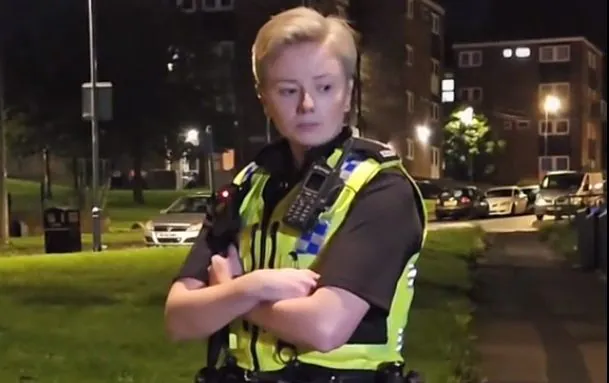
Yet there's a growing perception that the modern police recruitment model is prioritising sheer numbers over resilience, physical capability and conflict management skills. When an officer is faced with a physically imposing detainee — the often cited example of a 6ft 6in man — the issue should not be one of panic, loss of control or excessive force. It should be a test of training, teamwork and disciplined restraint. Police officers are granted extraordinary powers. In return, it demands extraordinary standards.
That is why each proven case of misconduct carries consequences far beyond the individual officer involved. It corrodes the legitimacy upon which all policing depends. It means that when the force quite rightly condemns violence against its personnel, a significant section of the public responds not with sympathy, but with scepticism.
None of this is to excuse those who assault officers. The courts have been correct to impose custodial sentences in serious cases. But a mature and confident police service would recognise that legitimacy is not secured by highlighting only the dangers it faces. It's secured by acknowledging, with equal prominence and transparency, the harm caused when their own officers seemingly cross the line.
Until Cleveland Police confronts that dual reality — that it can be both victim and the perpetrator within the same institutional history — their appeals for public solidarity will continue to ring hollow in the communities its now lost all confidence with.

For some families in Teesside, the debate about police violence is not an abstract argument played out in court reports and media statements. It is a walk to a graveside. And no press release can compete with that.


