Scarborough Street HMO Conversion Plans Rejected.....
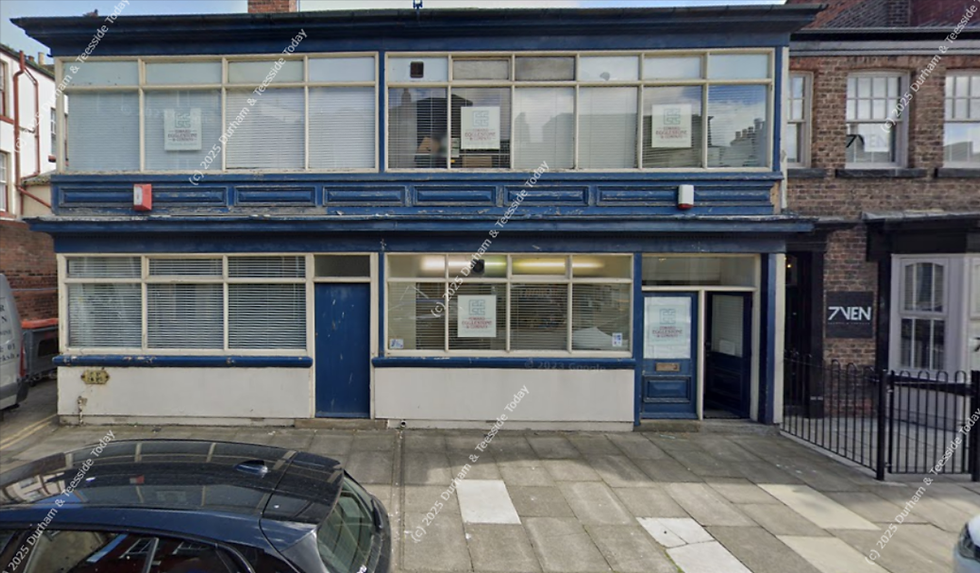
Concerns over the use of UPVC windows scuppers developers plans to convert an office block into a controversial House of Multiple Occupancy...
7th March 2025
Plans for the conversion of an office block into a controversial House of Multiple Occupancy in a Hartlepool street have been delivered a major setback, after HBC Exposed understands the Hartlepool Development Corporation this week refused the plans, citing concerns over the use of building materials not being in-keeping with local planning & heritage regulations.
Its claimed the Hartlepool Development Corporation issued the refusal notice for a planning application proposing the conversion of 3-5 Scarborough Street, located within the Church Street Conservation Area, from an office building into an 8-bed House in Multiple Occupation (HMO). The plans reportedly sparked much discussion about the balancing of modern development with the preservation of Hartlepool’s historic character, with the Hartlepool Civic Society and council officials all said to have raised significant concerns about the proposal’s impact on the area’s heritage.

In the plans which were put before the Hartlepool Development Corporation, its claimed the applicant argued the proposed changes would enhance the property and align with the aesthetic of Scarborough Street. They noted, “Whilst Scarborough Street has a mix of building styles, there's a large percentage of bay-fronted properties creating a traditional Victorian look to the street, therefore the proposed front elevation upgrade will not be out of context or style.” The plan involved removing the existing timber frontage and replacing it with two canted bay windows, a central door, and two single windows on the upper floor—all constructed with UPVC double glazing. The applicant further claimed that these alterations would “vastly improve the external appearance and make it more in keeping with Scarborough Street and the general appearance of the Church Street Conservation Area.”
Concerns from the Hartlepool Civic Society
However, the plans were said to have been strongly opposed by The Hartlepool Civic Society, who argued that they would neither improve the general appearance nor harmonize with the surrounding Victorian architecture.
“We believe that the proposed use of UPVC windows to the front elevation will not improve the general appearance and that it will be out of context with the other buildings,” the society stated.
They pointed out that no justification was provided for choosing UPVC over timber, a material more commonly used in the street and better suited to its historical context, with the Hartlepool Civic society emphasising that timber windows would not only align with the conservation area’s character but also offer environmental benefits, a consideration they felt was overlooked.
The Council’s Refusal: A Focus on Heritage

The Hartlepool Development Corporation’s refusal was said to have been grounded in national and local planning policies aimed at protecting heritage assets such as the ones in Hartlepool's Scarborough Street with the area deemed “at risk” by Historic England due to neglect and decay.
Under the Planning (Listed Buildings and Conservation Areas) Act 1990, local councils must prioritise preserving or enhancing the character of such areas. The National Planning Policy Framework (NPPF) reinforces this, urging positive enhancements that reveal an area’s significance and encouraging developments that contribute to local character and distinctiveness
The council’s Heritage and Open Spaces team were also said to have found the proposals lacking, describing Scarborough Street as part of a historic Victorian commercial hub, characterized by three-storey buildings with pitched slate roofs, brick or rendered elevations, and traditional sliding sash windows. The existing timber frontage at 3-5 Scarborough Street, though a later addition, was seen as a striking feature worthy of consideration. However, the applicant failed to provide a heritage statement assessing the building’s significance or justifying the removal of this frontage—a requirement under The National Planning Policy Framework (NPPF para. 207).
The proposed UPVC windows were said to have been a particular sticking point which ultimately derailed the entire application. The council noted that No explanation had been given for the choice of the material and why timber windows could not be installed, reflecting materials used elsewhere in the street.. Without this rationale, HBC planning officers concluded that the changes would “cause harm to the significance of Church Street Conservation Area,” failing to meet the areas stringent heritage standards.
Refusal was based on materials being used for conversion & worryingly.... not the number of controversial HMO's being granted approval

The refusal hinged on insufficient information and a lack of sensitivity to the conservation area’s character by the applicant, with the council criticising the applicant over the absence of a heritage statement detailing the building’s evolution and justifying the proposed alterations, but worrying also, was the apparent lack of the local councils probing of the applicants intentions for the building in an area that's already had a number of controversial HMO's approved by the same applicant in the space of just a few months, with significant public concern that the buildings being granted approval for conversion may not be in fact be "used for student accommodation" as so many of the plans being approved claim to be used for !
This decision however underscores Hartlepool’s commitment to preserving its local heritage, particularly in “at-risk” areas like Church Street with many supporting both the council & the HDC's decision to refuse the plans claiming the message is clear: & that proposals in conservation areas must be thoroughly justified, with detailed heritage assessments and a clear rationale for material choices.
But the planning refusal is also said to highlight broader tensions between modern development needs—like affordable housing—and the preservation of historical identity & whether the applicants justification for all these HMO's being created in one single area is really about preserving the towns local heritage, or whether its about turning areas such as the Church Street area into a HMO "superhub"...


